- Most people do not have a process for how they create with AI
- The same preparation mindset that works in high-performance rooms applies to AI
- "I don't know what to put in there" is the number one sign the process is missing
- The fix: take what's in your head and get it into AI, full context, every time
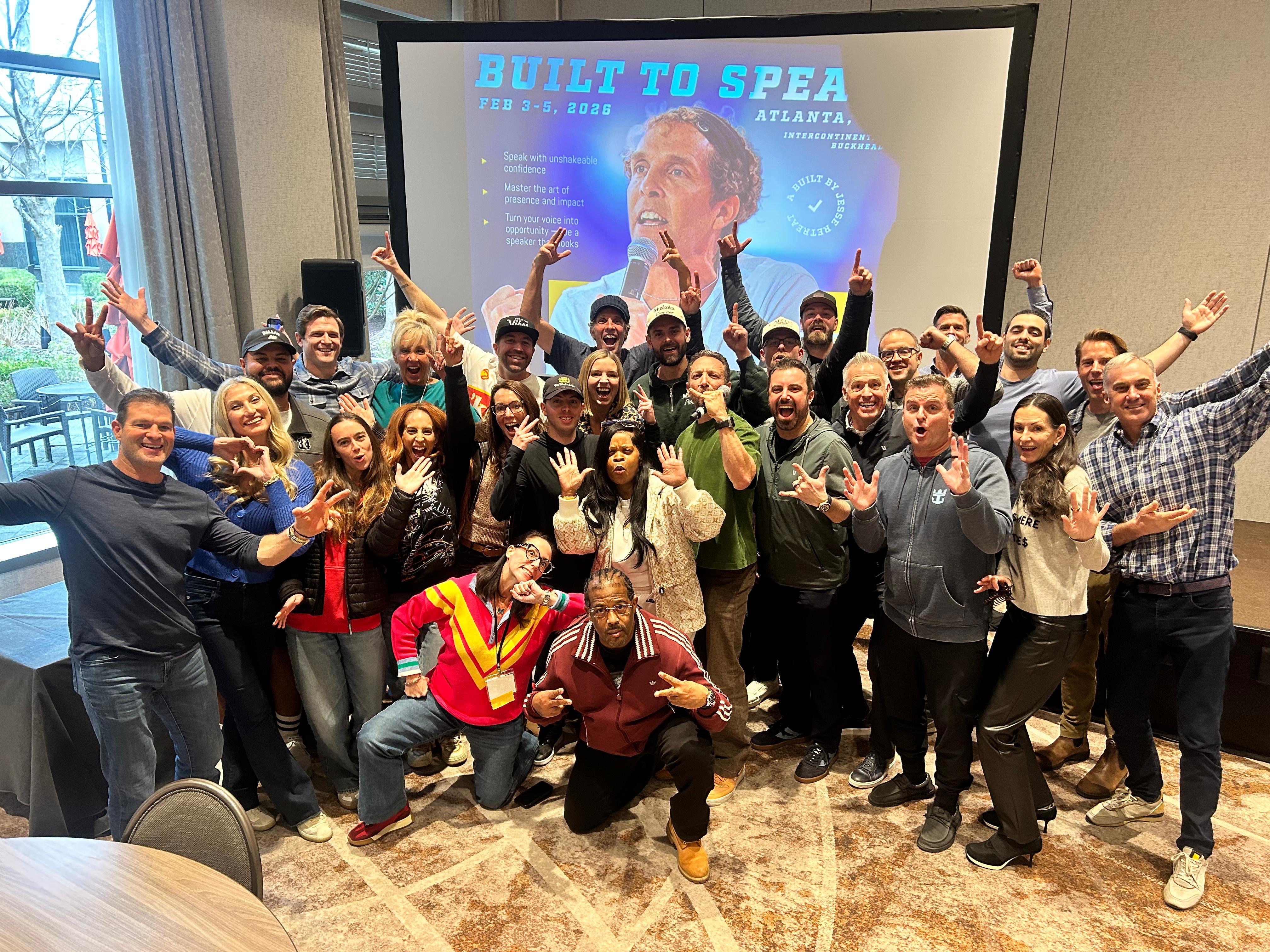
Before I went to Jesse Itzler's Built to Speak event, I spent a full month preparing.
My brand. My messaging. My positioning. My keynote. Everything.
I created a concept called Going On Tour With Jesse. The idea was simple: how would I show up if Jesse Itzler said, "Rob, you're on tour with me. 15 cities. You're coming on stage." I wanted to be ready for a moment I didn't know was coming.
I assumed I'd be in a room filled with people who had climbed Everest, exited eight-figure companies, built things at scale. So I had to show up at that level.
That month of preparation created a blueprint I still use today. It touched my marketing, my website, my speaking, my content. Everything got sharper because I had a process for how I was going to show up.
That same principle applies to AI. And most people are missing it entirely. They don't have a process for how they create with AI, and that's the single biggest reason the results feel generic.
Why Do Most People Get Generic Results From AI?
They don't have a process for how they create with AI. They're giving AI surface-level input and expecting world-class output, and the gap between those two things is where generic results live.
This week I was talking to a founder who uses AI five hours a week. This person exited a company for millions. Sharp, driven, successful by every measure.
But their AI results were generic. Frustrating. Felt like a waste of time.
I asked one question: "How many hours a week are you spending learning how to use AI?"
Zero.
Five hours using. Zero hours learning. No process for how they create with it.
They said, "I don't know what to put in there."
That one sentence told me everything. Most people do not have a process for how they create with AI. They open the tool, type something surface-level, and hope something good comes back.
That's like showing up to the biggest room of your life without preparing. You might get through it, but you're not performing at your best.
What Does Preparation Look Like With AI?
It starts with getting what's in your head into the tool. Full context, every time. Your voice, your goals, who you're creating for, and what the outcome should feel like. That's the preparation that changes everything.
The same way I prepared for Built to Speak, I prepare every time I sit down with AI.
It starts with context. I take what's in my head and get it into the tool. Not a two-sentence prompt. The full picture. Who I'm creating for, what matters, what the outcome should feel like, what my voice sounds like, what details make this mine.
One of the biggest shifts I teach is voice-first creation. You can speak roughly three times faster than you can type. When you speak, you naturally give more context, more nuance, more of what AI needs to actually help you.
The designers at Anthropic who built Claude don't write a line of code. They speak it. That's how the people building the tools actually use them.
So the first shift is simple: speak your full context into AI. Not the shortcut version. The real thing.
Beyond speaking, I build what I call a context library. This is a set of documents that AI reads every time I create. It starts with what I call Soul Data, the foundational layer of who you are, your identity, your values, your voice. From there it includes my business context, my goals, my values. Even my design system with my colors and fonts.
When all of that is loaded into AI, the output stops sounding generic. It sounds like me. The difference between "AI wrote this" and "this is exactly me" comes down to that foundation.
I recently built my entire website using AI in three days. No agency, no developer. The estimated cost if I had gone the traditional route? Over $25,000 and three months of back and forth. The actual cost was $20 a month for a Claude subscription and my own context library. That's the kind of leverage a process creates. It's also a perfect example of what it looks like to build real capacity in your business.
What Happens When You Actually Build the Foundation?
You become tool-agnostic. Your foundation travels with you between ChatGPT, Claude, or whatever launches next month. The tool is the engine. Your context library is the fuel.
Here's what most people miss. When you build a context library and speak your full picture into AI, you become tool-agnostic. You can move between ChatGPT, Claude, or whatever platform launches next month because your foundation travels with you. The tool is just the engine. Your context library is the fuel.
I recently switched from ChatGPT to Claude. Three years of daily use in one platform, gone in a month. It didn't matter. Because my methodology, my context, my voice documents, my business goals, all of it transferred in minutes. The output was better on day one because the foundation was already built.
That's what a process gives you. Freedom to move. Speed when you create. Results that sound like you wrote them yourself, because you did. You just had a partner doing the heavy lifting.
On a coaching call this week, I built a complete website shell, a book launch marketing roadmap, and a professional lead magnet in real time. On a single call. The person I was working with had been quoted over $35,000 from a marketing agency for similar deliverables. We created a first version of all three in under an hour using AI with a proper context foundation.
That's not about being technical. That's about being prepared.
Do I Need a Technical Background to Build a Process?
No. The founders who get the best results with AI are not the most technical people in the room. They're the most intentional.
No.
I don't have a technical background. I'm an entrepreneur, a speaker, a coach. The founders I work with who get the best results are not the most technical people in the room. They're the most intentional.
The difference between most people and world-class is only about how you think.
When I was preparing for Built to Speak, I didn't have a background in events or keynote stages at that level. But I had a process. I looked at my marketing, my messaging, my website. I started getting reps. I built a blueprint.
AI works the exact same way. The people playing the game at the highest level are the ones who show up with a process, a foundation, and a commitment to learning.
How Do I Start Building My AI Process?
Start by speaking your full context into AI before every session. Take 60 seconds, say out loud what you need, the outcome, the details, everything in your head, and put all of it into the tool.
Start with one shift tomorrow.
Before you open AI, take 60 seconds and speak out loud what you actually need. The outcome, the context, the details. Everything that's in your head about this project, this task, this idea.
Then put all of that into the tool.
Context in, clarity out.
Here's a practical way to think about it. I teach a concept called the Human-AI Sandwich. Picture a sandwich. The first layer of bread is you. You go first. You take what's in your head, all the context, the vision, the specifics, and you speak it into AI. That's 10% of the work.
The middle of the sandwich, the meat and the veggies, that's 80%. You and AI go back and forth. You're co-creating. You say "I like this, change that, move this, this doesn't sound like me." It's a conversation, not a one-shot prompt.
The final layer of bread is you again. You come back in and review. Does this pass your standard? Is this your voice? Would you put your name on it? That's the last 10%.
Most people skip the first and last layers entirely. They go straight to the middle, type something vague, accept whatever comes back, and wonder why it feels off. The system is the advantage.
From there, you build your foundation. You document your brand voice. You capture your business context, your goals, your values. You create a context library that AI can read every time you sit down to create. So the output stops being generic and starts being exactly you. If you want to see the full system for how I organize all of this, I wrote about how to stop starting from scratch every time you use AI.
The people I work with who go through this process, within two weeks they're operating at a level they didn't know was possible. Not because the tool changed. Because their preparation changed.
The Preparation Is the Advantage
The tools are available to everyone. Preparation is what separates the people getting world-class results from everyone else. Show up with a process, a foundation, and full context, and the results speak for themselves.
The AI tools are available to everyone. The models keep getting better. Access is not the differentiator.
Preparation is.
The people getting world-class results have a process for how they show up. They've invested in learning, not just using. They bring full context, not half-baked prompts. They treat every session the way you'd treat showing up to the biggest room of your life.
Preparation is what lets you orchestrate the stack instead of drowning in it as AI gets more capable.
When you show up prepared, the results are undeniable.
Ready to Go Deeper?
The Gold Vault is my AI operating system built in Notion. It's the system I use every day to organize my context, my content, my workflows, and every piece of gold I create with AI. Everything I described in this post, the context library, the repeatable process, the foundation that makes AI sound like you, lives inside the Gold Vault.
If you're ready to build your own AI foundation, dive in.